Un motor Clase 1 División 2 no tiene que ser a prueba de explosiones. Un motor de inducción de jaula de ardilla trifásico estándar puede funcionar en una ubicación Clase I, División 2 cuando no tiene componentes que normalmente forman arco y el código de temperatura de su placa de identificación mantiene la temperatura máxima de la superficie por debajo de la temperatura de ignición del gas involucrado. Ese principio, definido por el Código Eléctrico Nacional (NEC) de EE. UU. y aplicado a través de IEEE 1349, es lo primero que debe comprender antes de comprar cualquier motor para una ubicación peligrosa, porque separa los gastos de seguridad necesarios de las costosas especificaciones excesivas.
¿Qué significa “Clase I División 2”?
Clase I División 2 (C1D2) es una clasificación de ubicación, no una clasificación de motor. Según el artículo 500 del NEC, describe un área donde los gases o vapores inflamables están ausentes durante el funcionamiento normal pero podrían aparecer en condiciones anormales, como una brida con fugas, un diafragma roto o un procedimiento de mantenimiento que abre brevemente una línea de proceso.
El NEC clasifica las ubicaciones peligrosas según tres preguntas: cuál es el peligro (Clase), qué probabilidad hay de que esté presente (División) y a qué familia química pertenece (Grupo).
| clase | Forma de peligro | Gases representativos | División 1 | División 2 |
|---|---|---|---|---|
| clase I | Gases y vapores inflamables | Propano, hidrógeno, etileno. | Presente durante el funcionamiento normal | Presente sólo bajo operación anormal |
| clase II | polvo combustible | Polvo de carbón, harina de cereales | Polvo presente en funcionamiento normal | Polvo presente sólo durante condiciones adversas |
| clase III | Fibras inflamables | Pelusa textil, aserrín | Fibras manipuladas o procesadas | Fibras almacenadas cerca del equipo. |
Debido a que el gas de División 2 rara vez está presente y generalmente se disipa rápidamente, el Código lo trata como una categoría de menor riesgo que la División 1. Ese único hecho impulsa la lógica de selección del motor que se explica a continuación.
Cómo IEEE 1349 guía la selección de motores en la División 2
IEEE 1349, publicada por primera vez en 2001 y revisada más recientemente en 2021, es la guía de referencia para la aplicación de máquinas eléctricas en ubicaciones de Clase I División 2 y Zona 2. No exige un tipo de motor; define un procedimiento basado en el riesgo basado en tres controles.
Verificación del código de temperatura
Todo gas inflamable tiene una temperatura de autoignición (AIT) y la superficie del motor nunca debe alcanzarla. El código T de la placa de identificación marca la temperatura máxima de la superficie en condiciones nominales: T3 permite hasta 200 °C, T4 hasta 135 °C y T6 hasta 85 °C. Si el gas AIT está a 180°C, un motor T3 no es aceptable, porque su superficie puede llegar a 200°C; la selección debe pasar a un motor T4 con clasificación de 135 °C o menos.
Verificación de componentes de arco
La segunda verificación pregunta si el motor produce arcos o chispas durante el funcionamiento normal. Las máquinas de CC con escobillas, los motores de rotor bobinado y los motores monofásicos con interruptores de arranque centrífugos expuestos sí lo hacen. Los motores de inducción de jaula de ardilla no lo hacen, razón por la cual dominan las aplicaciones de División 2 y por qué nuestros marcos trifásicos NEMA e IEC son el punto de partida natural para estos proyectos.
Análisis de recinto y respiración interna.
La tercera verificación cubre la respiración interna: cada motor inhala y exhala a medida que cambia la temperatura, por lo que el gas inflamable puede ingresar a un motor inactivo y permanecer allí hasta que se reinicie. IEEE 1349 requiere que el evaluador confirme que la combinación de gabinete, código T y temperatura ambiente evita una ignición interna, o que el gabinete puede contener una. Los motores construidos según estándares a prueba de explosiones contienen un encendido interno por diseño; las características constructivas que hacen motores a prueba de explosiones efectivos son esenciales en la División 1, pero en la División 2 son una opción más que un requisito.
Opciones de gabinete que funcionan en una configuración C1D2
Cuatro familias de gabinetes cubren casi todas las decisiones de Clase I División 2, y la elección correcta depende del resultado de la verificación de temperatura, el entorno de instalación y los requisitos del proceso, no de la etiqueta de marketing.
| recinto | Construcción | Rol típico de C1D2 |
|---|---|---|
| PAO | Marco abierto a prueba de goteo, ventilación ambiental. | Sitios interiores no corrosivos donde pasan las comprobaciones de arco y código T |
| TEFC de acero laminado | Ventilador externo totalmente cerrado | Elección predeterminada de uso general para la División 2 |
| TENV | Totalmente cerrado, sin ventilador, convección natural. | Pequeñas bombas y máquinas herramienta; temperatura superficial predecible |
| TEFC de hierro fundido | Estructura de hierro fundido, ventilador externo. | Ambientes corrosivos, húmedos o mecánicamente hostiles. |
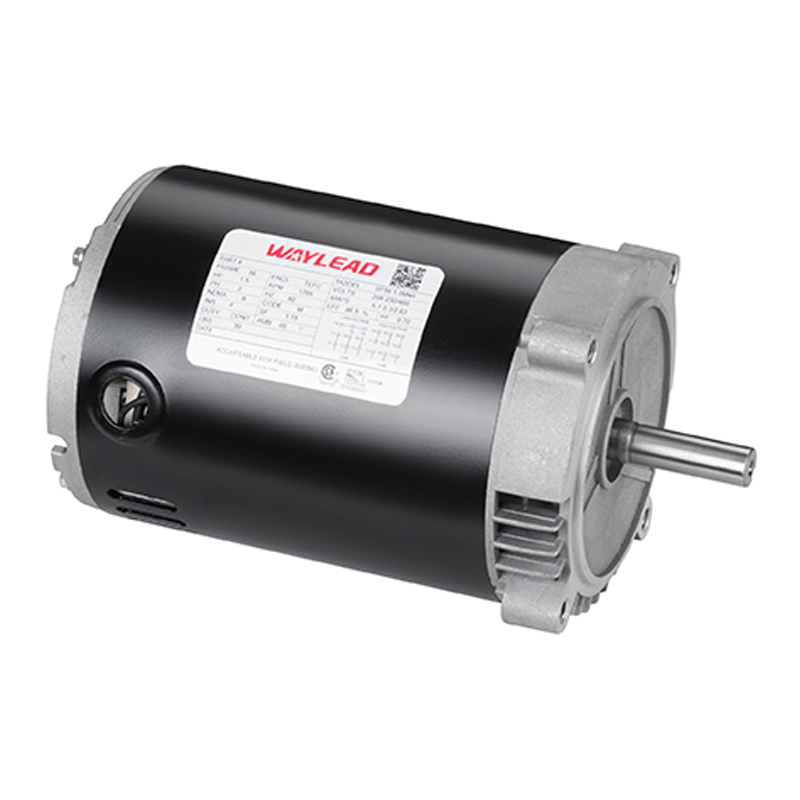
Los motores TENV merecen una atención específica en una revisión de la División 2. Sin ventilador de refrigeración, todo el bastidor se calienta uniformemente, lo que simplifica la evaluación del código de temperatura y, a menudo, produce una temperatura superficial máxima más baja que la de un motor enfriado por ventilador bajo la misma carga. Para aplicaciones de bombas compactas y máquinas herramienta, un diseño TENV suele ser la respuesta más directa.
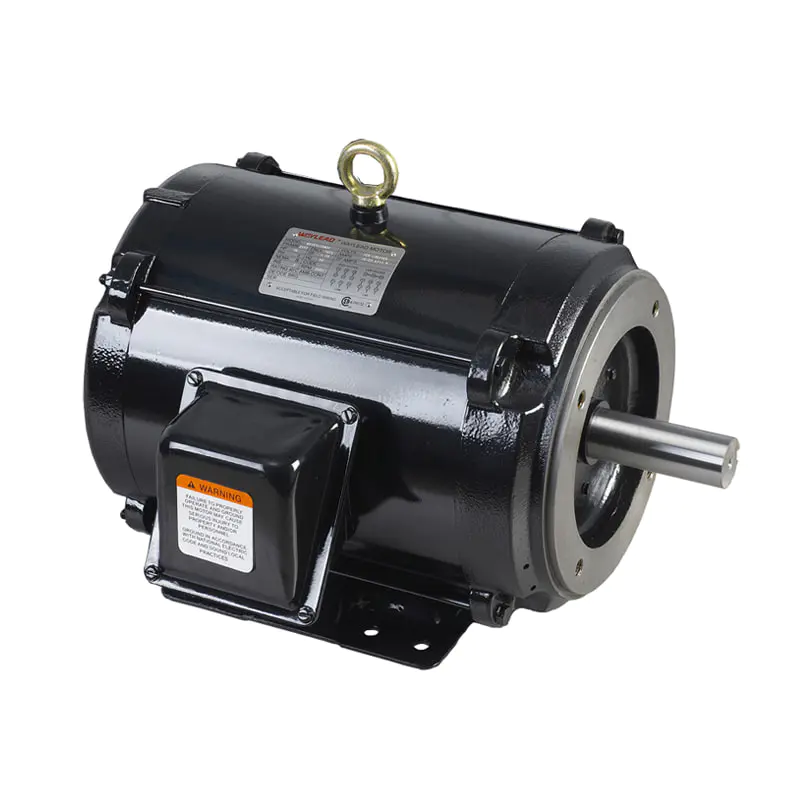 Motor TENV para aplicaciones en áreas peligrosas de División 2 Este motor totalmente cerrado y no ventilado calienta uniformemente sin ventilador, lo que simplifica la evaluación del código de temperatura y, a menudo, reduce la temperatura máxima de la superficie. Vale la pena reseñarlo como una solución compacta y directa para bombas y máquinas herramienta. Ver producto →
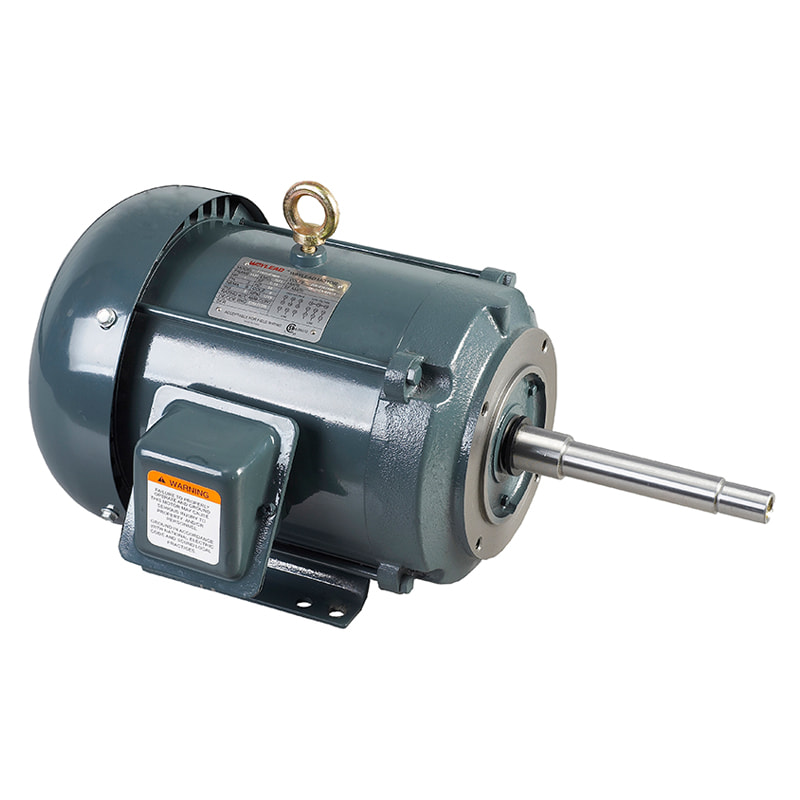
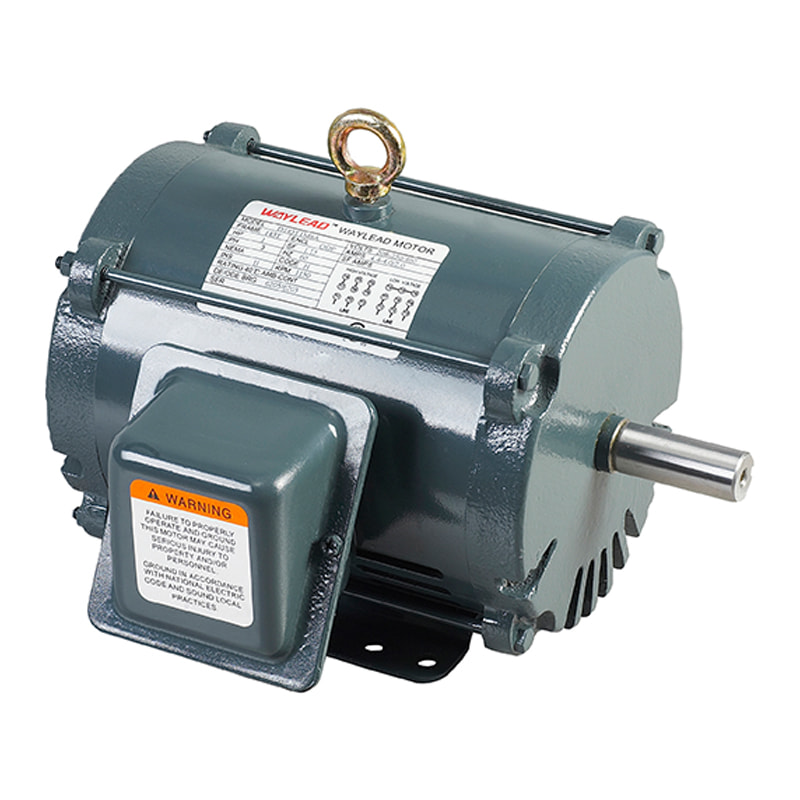
 Cuando el proceso circundante es húmedo, salado o polvoriento, un marco TEFC de hierro fundido proporciona la resistencia a la corrosión, la transferencia de calor y la resistencia mecánica de las que carecen los marcos de uso general de acero laminado. Esto es importante en una auditoría de área peligrosa porque la corrosión de la superficie y las picaduras degradan la disipación de calor, y un cuerpo del motor más caliente erosiona el margen de seguridad del código T durante la vida útil.
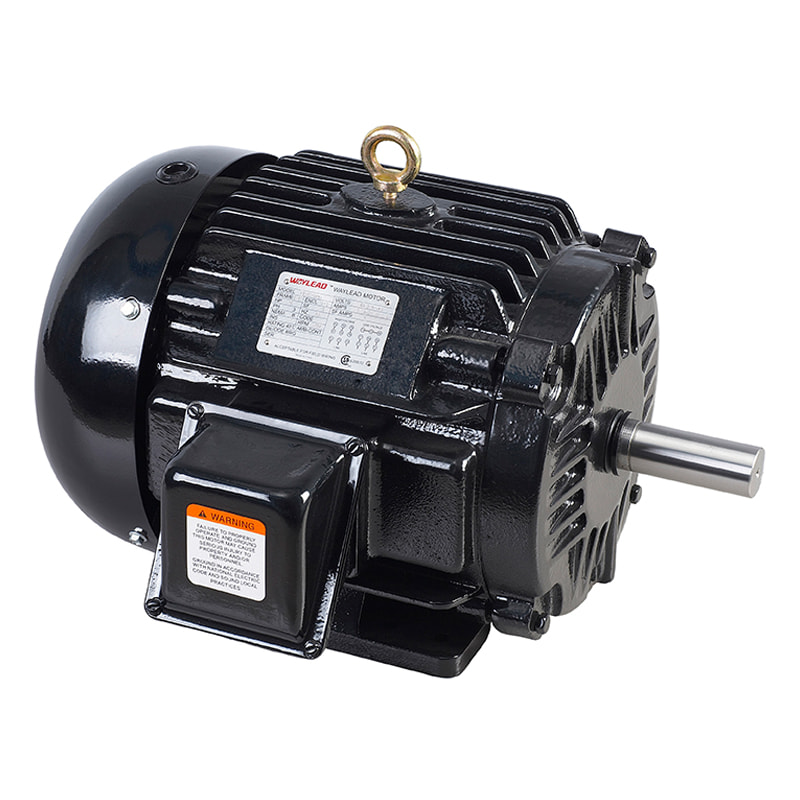 Motor de eficiencia premium de hierro fundido totalmente cerrado Con un marco TEFC de hierro fundido, este motor resiste la corrosión, mejora la transferencia de calor y mantiene la resistencia mecánica en ambientes húmedos, salados o polvorientos. Relevante para preservar los márgenes de seguridad del código T durante las auditorías de áreas peligrosas. Ver producto →
 Paso a paso: creación de una especificación C1D2 defendible
La especificación de un motor C1D2 es tan buena como su documentación. Siga estos seis pasos para producir una selección que satisfaga a ingenieros, inspectores y aseguradores.
- Identifique el gas o vapor y su grupo NEC (A: acetileno, B: hidrógeno, C: etileno, D: propano) en los dibujos de clasificación de áreas.
- Registre la temperatura de autoignición del gas y establezca el código T objetivo debajo de ella, dejando margen para las oscilaciones ambientales y de carga.
- Verifique que el motor candidato no tenga componentes que formen arcos, como escobillas, relés o un interruptor centrífugo abierto.
- Confirme que el código T se mantenga en la temperatura ambiente de funcionamiento real, no solo en la condición de referencia de 40 °C impresa en los catálogos.
- Solicite el paquete de certificación del fabricante: listado CSA o UL, código de temperatura en la placa de identificación y una evaluación IEEE 1349 por escrito.
- Guarde la evaluación en el archivo del proyecto para que el personal de mantenimiento y los futuros compradores puedan ver por qué el motor está aprobado para ese espacio.
El paso cinco es el que se omite con más frecuencia y el que evita disputas. Una nota "Clase I Div 2" en una hoja de datos no es prueba; la marca de la placa de identificación debe basarse en un informe de prueba certificado. Si el proveedor no puede producir ese informe, el motor no tiene la clasificación.
Errores comunes en la compra de motores C1D2
La mayoría de los errores de adquisición en la División 2 provienen de tratarla como la División 1 o de confiar en el nombre del gabinete en lugar de los datos de temperatura. Los errores recurrentes son consistentes:
- Comprar un motor a prueba de explosiones por defecto. Puede costar de dos a cuatro veces más que un motor TEFC de uso general evaluado adecuadamente y no agrega ningún beneficio de seguridad cuando la verificación del código T ya pasa.
- Pasando por alto la temperatura ambiente real. Un motor clasificado a una temperatura ambiente de 40 °C puede exceder su límite de código T en una sala de bombas que alcanza los 50 °C en verano.
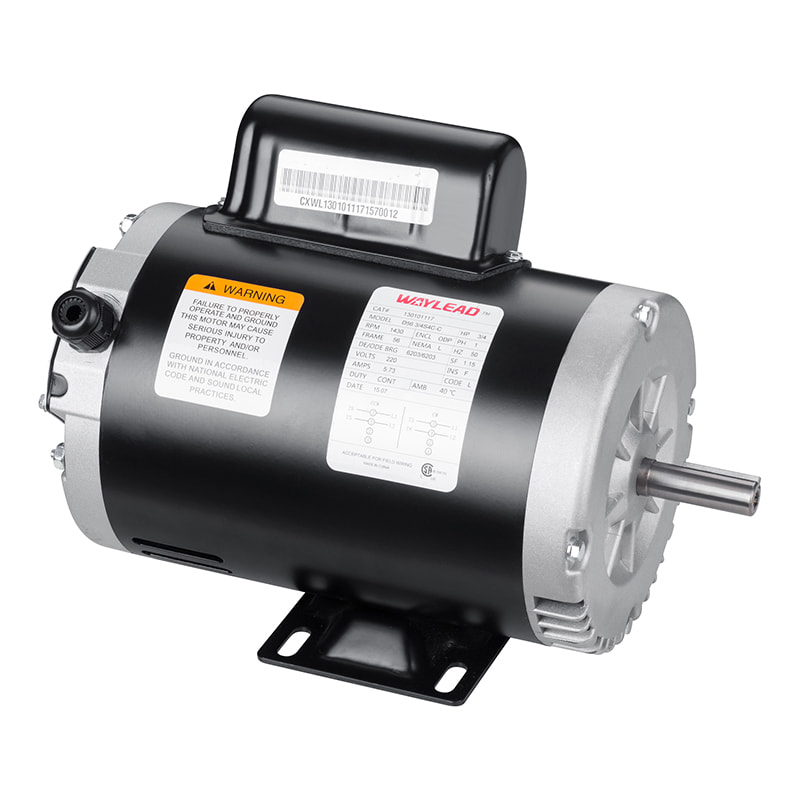
- Suponiendo que todo motor monofásico esté descalificado. Los diseños de funcionamiento y arranque de condensador con interruptores sellados o relés PTC se pueden evaluar para la División 2, pero cada modelo debe evaluarse individualmente.
- Rebobinado de un motor C1D2 sin proceso de reparación controlado. Cambiar el tamaño del cable o la clase de aislamiento cambia la disipación de calor; el motor pierde su código T a menos que el taller de reparación lo vuelva a verificar.
- Aceptar la palabra del vendedor en lugar del informe. La certificación se puede rastrear hasta una placa de identificación y un registro de prueba; Pregunte por ambos antes de comprar.
Si un supervisor de mantenimiento presiona para que todo sea a prueba de explosiones, la práctica diferencias entre motores a prueba de explosiones y motores ordinarios Explique por qué una máquina de inducción estándar a menudo puede hacer el trabajo por una fracción del costo.
Preguntas frecuentes sobre motores Clase 1 División 2
¿Necesito un motor a prueba de explosiones en Clase I División 2?
No. La División 2 permite motores de uso general que no tienen componentes que normalmente forman arco y cuyo código T se mantiene por debajo de la temperatura de autoignición del gas. Se requiere una construcción a prueba de explosiones en la División 1 y se permite en la División 2, pero en muchas ubicaciones C1D2 supera las especificaciones.
¿Cómo se compara la Zona 2 con la División 2?
La Zona 2 es el equivalente basado en IEC definido en el artículo 505 de NEC. Cubre los mismos riesgos de gas pero utiliza diferentes conceptos de marcado y protección, como equipos Ex nA antichispas. IEEE 1349-2021 aborda ambos sistemas, por lo que una evaluación de motor puede admitir cualquiera de las marcas.
¿Puede un motor rebobinado mantener su clasificación Clase I División 2?
Solo si el taller de reparación vuelve a evaluar el motor y vuelve a verificar el código de temperatura después del rebobinado. Los diferentes tamaños de cables, clases de aislamiento o procesos de barniz cambian el comportamiento térmico. Sin una nueva verificación documentada, el motor reparado debe tratarse como no clasificado para servicios peligrosos.
¿Se permiten motores monofásicos en ubicaciones de División 2?
Permitido sólo cuando el dispositivo de arranque no puede provocar la ignición. Un interruptor de arranque centrífugo abierto forma un arco en cada arranque. Los diseños monofásicos con interruptores sellados, relés PTC o configuraciones de capacitor permanente eliminan esa fuente de arco y pueden pasar una revisión IEEE 1349 cuando el código T y el gabinete también son aceptables.
Seleccionar un motor Clase 1 División 2 es una decisión sobre temperatura, componentes y documentación, no sobre comprar el marco más pesado del mercado. Trabaje con el grupo de gas, el código T y la verificación de la placa de identificación, e instalará un motor que sea seguro, conforme y con un precio razonable.