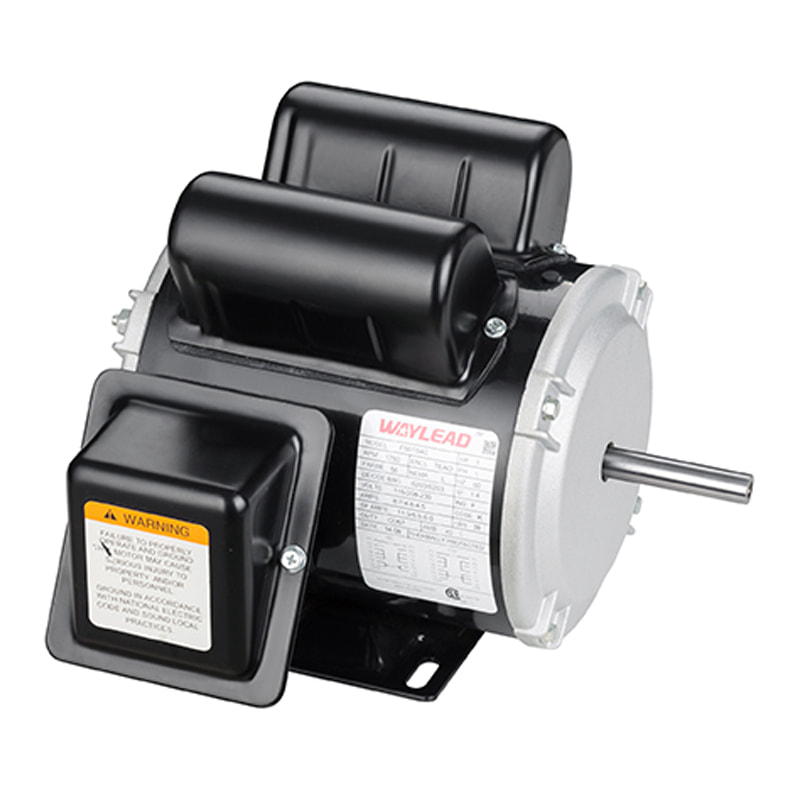
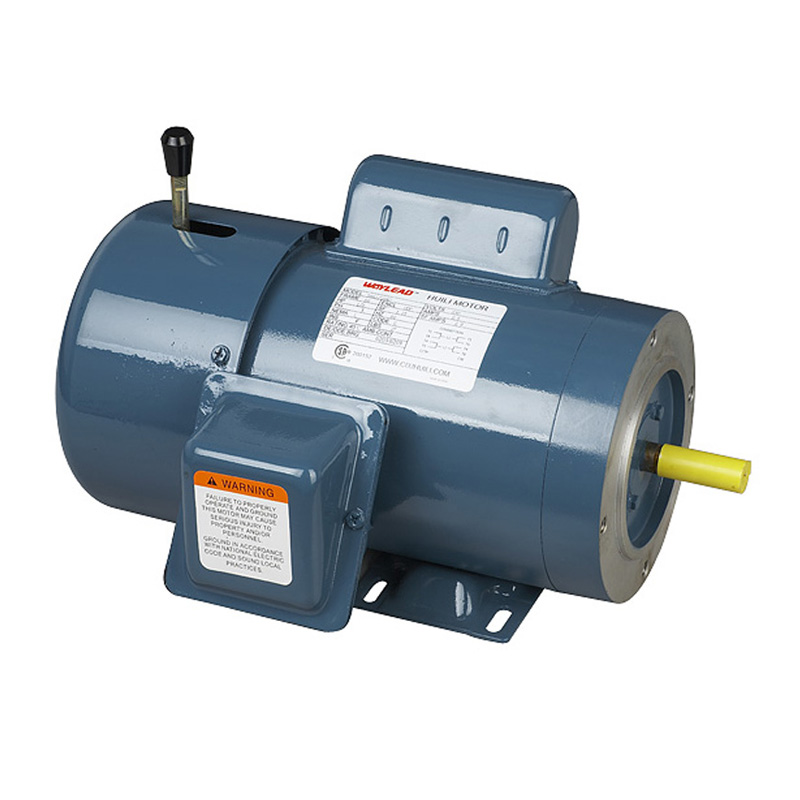
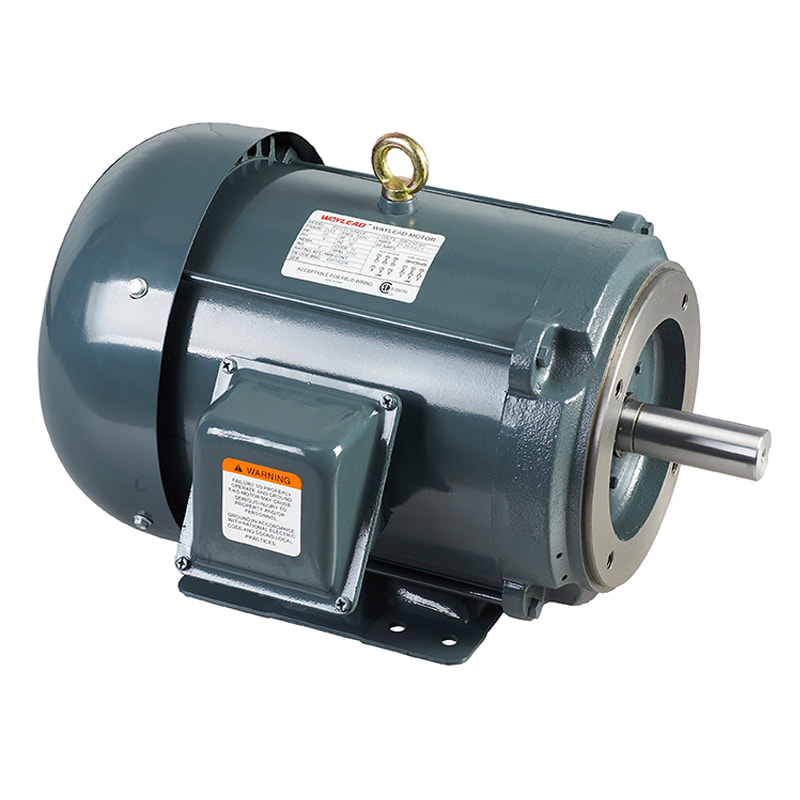
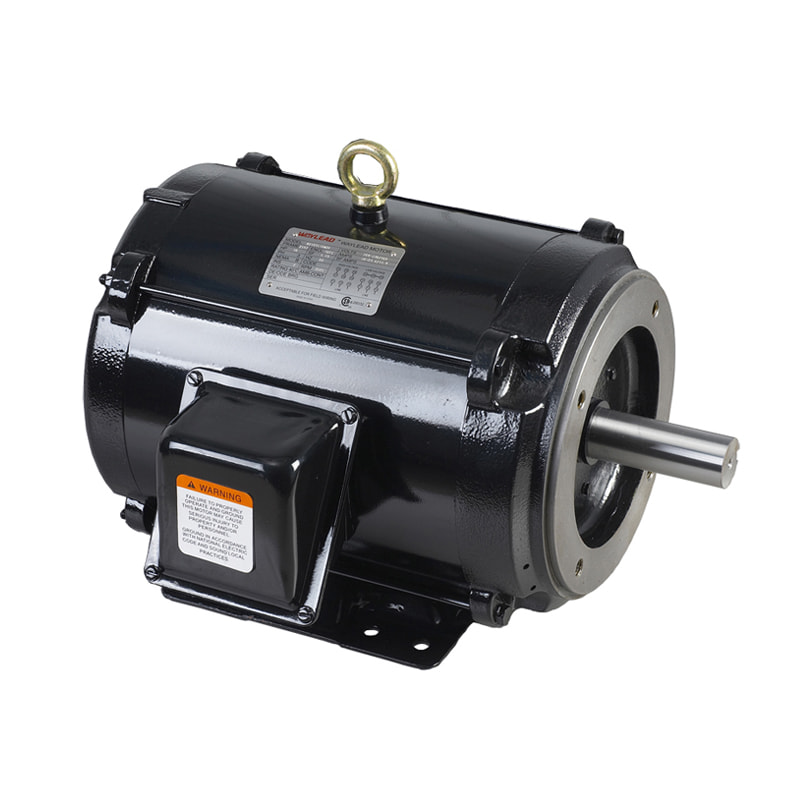
El diseño de motores de CA es la disciplina de ingeniería que consiste en convertir energía eléctrica en movimiento giratorio controlado y al mismo tiempo gestionar compensaciones entre par, velocidad, temperatura, eficiencia y costo. Las decisiones de diseño más importantes se toman en la interfaz del estator bobinado y del rotor, porque es allí donde se genera el campo magnético y se convierte en par. Un motor de CA bien diseñado no sólo debe arrancar una carga de manera confiable, sino también funcionar con la mayor eficiencia práctica en todo su rango de velocidad, sobrevivir a su envoltura térmica y cumplir con los requisitos de tolerancia mecánica del equipo accionado.
La base del diseño de motores de CA
Cada diseño de motor de CA comienza con unos pocos componentes que soportan carga y que dictan la mayor parte del rendimiento.
- Núcleo y devanados del estator: El estator es la parte estacionaria que transporta el suministro de CA. El núcleo está construido con acero al silicio laminado para reducir las pérdidas por corrientes parásitas y los devanados están dispuestos para producir un campo magnético giratorio. El patrón de devanado, el calibre del cable y el número de ranuras afectan directamente la densidad de flujo y la densidad de corriente.
- Rotor: En la mayoría de los motores de CA industriales, el rotor es una construcción de jaula de ardilla con barras conductoras en cortocircuito por anillos terminales. La geometría de la jaula, el material de la barra y el ángulo de inclinación se utilizan para dar forma al par de arranque, el par de funcionamiento y el ruido.
- Marco y cerramiento: El marco soporta el estator y protege las partes internas. Las opciones de diseño incluyen abierto a prueba de goteo (ODP), totalmente cerrado y enfriado por ventilador (TEFC) o totalmente cerrado y sin ventilación (TENV). Estos marcos definen la ruta de enfriamiento y el grado de protección ambiental.
- Rodamientos y eje: El tipo de rodamiento, la holgura y la lubricación determinan cuánta vibración y carga axial puede absorber el motor. El diámetro del eje y el material están dimensionados para el momento de flexión y la carga de torsión aplicados.
Compensaciones entre el diseño de motores monofásicos y trifásicos
Una de las primeras decisiones de diseño es si el motor funcionará con energía monofásica o trifásica. Esta elección cambia el mecanismo de arranque y el perfil de torsión.
| Aspecto de diseño | Monofásico | trifásico |
|---|---|---|
| Mecanismo de arranque | Requiere devanado auxiliar, condensador o polo sombreado. | Arranque automático gracias al campo giratorio |
| Potencial de eficiencia | Más bajo para el mismo tamaño de marco | Mayor debido al campo magnético equilibrado |
| Suavidad del par | Par más pulsante | par constante |
| Aplicaciones típicas | Ventiladores, bombas, pequeñas herramientas. | Compresores, transportadores, bombas, máquinas industriales. |
| Complejidad del diseño | Red inicial más alta | Estator más simple pero marco más grande para HP bajos |
Parámetros clave de diseño y tolerancias
El diseño del motor de CA suele definirse mediante un pequeño conjunto de parámetros que el comprador puede especificar.
- Clase de eficiencia – NEMA Premium o IEC IE2/IE3. Esto determina la calidad del material y las pérdidas permitidas.
- factor de servicio – El margen de sobrecarga más allá de la potencia nominal. Un factor de servicio de 1,15 significa que el motor puede funcionar con una sobrecarga del 15 % sin exceder los límites de aislamiento.
- Aumento de temperatura y clase de aislamiento. – El aislamiento clase B o F permite un aumento máximo de temperatura de 80K o 105K respectivamente. Un diseño con una reserva térmica mayor dura más en ambientes calurosos.
- Par de arranque y corriente de rotor bloqueado – Los motores con alto par de arranque utilizan rotores de barra profunda o de doble jaula, lo que aumenta la corriente del rotor bloqueado. Los límites de irrupción pueden forzar un compromiso en el diseño.
- Ruido y vibración – Medido en dB(A) y mm/s. Un diseño que minimiza los armónicos de las ranuras magnéticas también reduce el ruido y la vibración.
Para conocer estrategias prácticas para reducir la vibración y el ruido, consulte nuestra guía sobre motores antivibraciones .
La eficiencia energética no es sólo un beneficio de marketing; es un requisito legal en muchas jurisdicciones. En Norteamérica, los estándares NEMA Premium establecen niveles mínimos de eficiencia a carga completa. En el mercado internacional, IEC 60034-30-1 define las clases de eficiencia IE1, IE2, IE3 e IE4. Un motor de alta eficiencia normalmente utiliza mejores grados de acero al silicio, más cobre en el estator y una geometría optimizada de la barra del rotor para reducir el deslizamiento.
Para un comprador, la decisión de elegir un motor IE3 en lugar de un motor IE2 a menudo se justifica por el período de recuperación de la inversión. Para un motor de 10 HP que funciona 6000 horas al año, el ahorro de energía puede ser del 3 al 5%, lo que puede recuperar el precio de compra más alto en menos de dos años. El desafío del diseño es que lograr una mayor eficiencia a menudo significa una ligera reducción en el par de arranque y un aumento en la inercia del rotor. Esta es la razón por la que un motor diseñado para una aplicación puede no ser un reemplazo directo para otra.
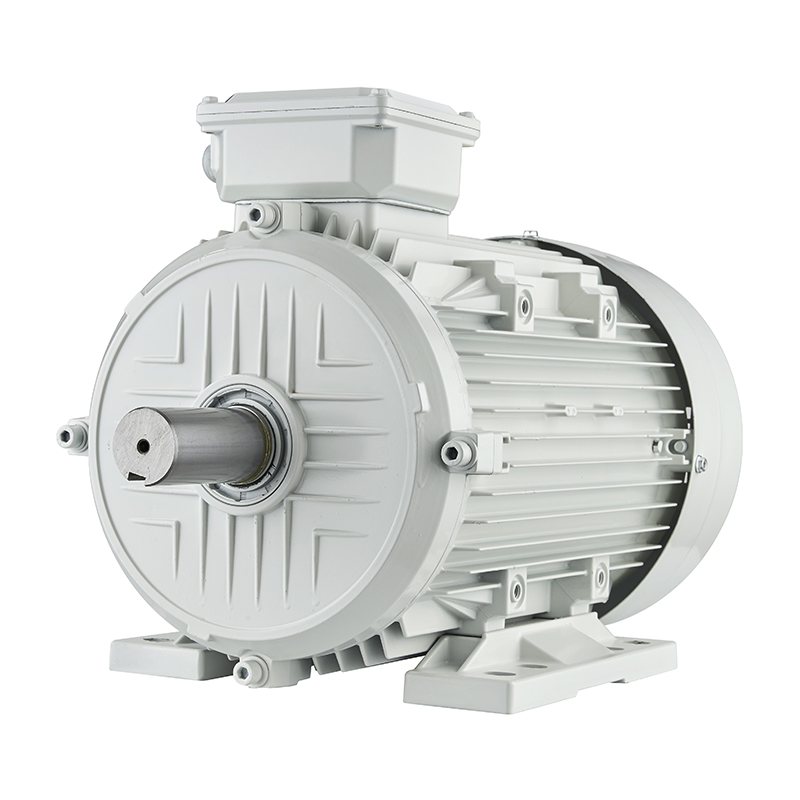 Motor de eficiencia premium IEC/IE3 para aplicaciones de bombas y compresores Este motor IEC/IE3 ofrece una eficiencia superior entre 0,75 y 37 kW y múltiples polos, con opciones de carcasa que van desde aleación fundida a presión hasta hierro fundido. Su diseño equilibra el ahorro de energía con las necesidades específicas de la aplicación, lo que lo convierte en una opción relevante al considerar las compensaciones entre la rentabilidad y el rendimiento. Ver producto →
 Opciones de diseño específicas de la aplicación
Ningún diseño funciona para todas las cargas. Los motores de las bombas necesitan un amplio rango de velocidades y un buen ajuste hidráulico; los motores de los compresores necesitan un par de arranque elevado; Los motores de los ventiladores necesitan un funcionamiento silencioso y baja vibración. Podemos ayudarle a seleccionar o personalizar un motor que se adapte a su aplicación.
Motores de bomba
Los motores de bomba generalmente están diseñados con un marco y una configuración de montaje específicos para adaptarse a una bomba de acoplamiento cerrado o de acoplamiento flexible. En las bombas de chorro, el motor debe proporcionar un par de arranque alto para la aplicación de chorro en pozos poco profundos. Un diseño a prueba de goteo es común donde hay agua presente. El marco NEMA 56 es un tamaño estándar para motores de bombas de caballos de fuerza integrales y fraccionarios.
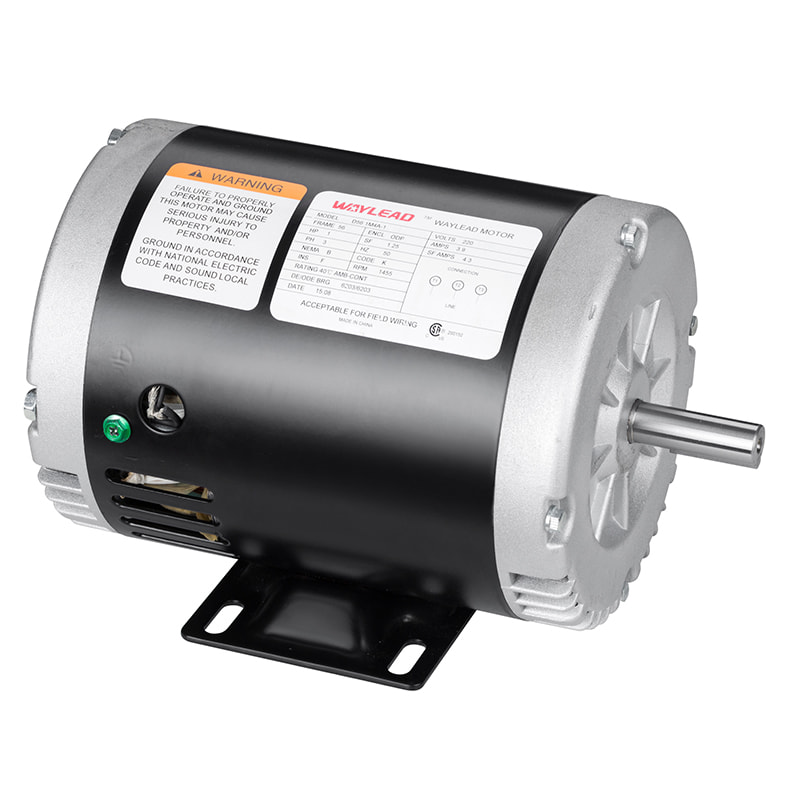 Motor trifásico a prueba de goteo de 56 bastidores para bombas de chorro Diseñado para funcionar con bombas de chorro, este motor de 56 bastidores a prueba de goteo ofrece un alto par de arranque y un factor de servicio de 1,15. Su marco NEMA estándar simplifica el reemplazo o la integración, lo que lo convierte en una opción práctica para sistemas de bombas que requieren energía trifásica robusta. Ver producto →
 Motores EC y control electrónico
Los motores de conmutación electrónica (EC) no son máquinas de inducción tradicionales; Utilizan un rotor de imán permanente y un convertidor electrónico integrado. Ofrecen alta eficiencia a carga parcial y se usan comúnmente en ventiladores HVAC y bombas de velocidad variable. El diseño necesita una gestión térmica cuidadosa de la electrónica y un circuito de control de acoplamiento.
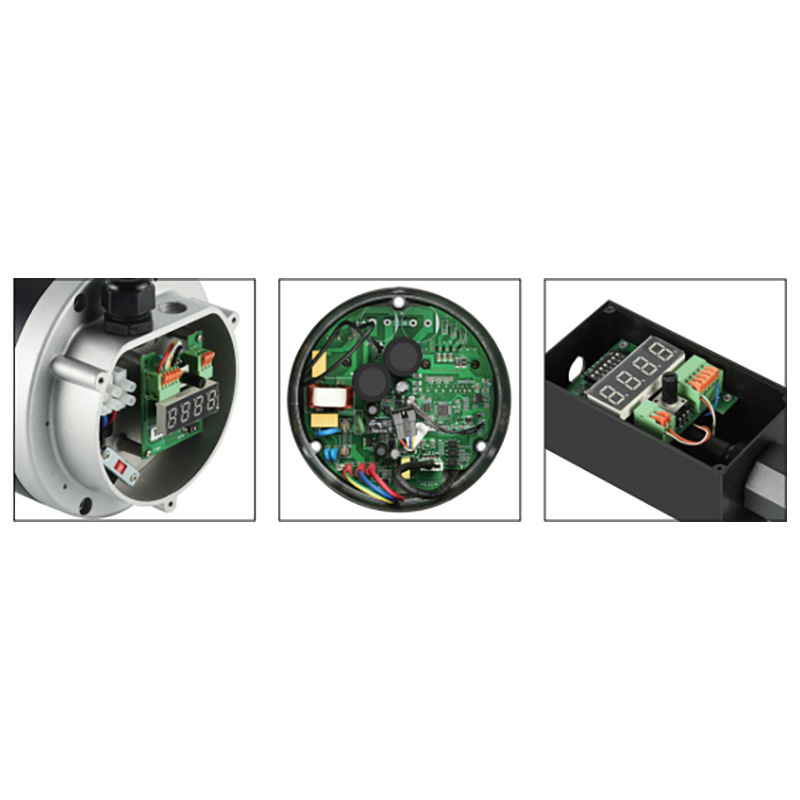 Motor NEMA EC con control electrónico integrado Este motor EC utiliza tecnología de imán permanente y un convertidor electrónico para una alta eficiencia de carga parcial, adecuado para aplicaciones de bomba o HVAC de velocidad variable. Con certificación CSA/CUS y UL, cumple con los estándares norteamericanos y al mismo tiempo respalda estrategias modernas de control de ahorro de energía. Ver producto →
 Preguntas frecuentes sobre el diseño de motores de CA
¿Cuál es el factor más crítico en el diseño de un motor de CA?
El factor limitante suele ser el diseño térmico. Un motor que no puede disipar el calor fallará incluso si el diseño electromagnético es perfecto. El aumento de temperatura está directamente relacionado con las pérdidas y el método de enfriamiento.
¿Puedo reemplazar un motor IE2 por un motor IE3 sin rediseñar el equipo accionado?
En la mayoría de los casos sí, pero debe verificar el tamaño del marco, la altura del eje y el montaje. Los motores IE3 suelen tener una estructura más larga o un ventilador de refrigeración diferente para soportar pérdidas más bajas.
¿El tipo de carcasa afecta la eficiencia del motor?
Sí. Un motor TEFC (totalmente cerrado y refrigerado por ventilador) tiene un ventilador que consume energía adicional y reduce la eficiencia general. Sin embargo, en ambientes polvorientos o húmedos, es la opción más segura. En un lugar limpio y seco, un motor abierto a prueba de goteo puede generar pérdidas ligeramente menores porque no se necesita un ventilador interno.
¿Por qué algunos motores de CA tienen un par de arranque mayor que otros?
El diseño de la barra del rotor controla esto. Un rotor de barra profunda aumenta la resistencia efectiva del rotor en el arranque, produciendo un alto par de arranque. Un rotor de doble jaula proporciona un par de arranque aún mayor pero con una menor eficiencia a plena carga. La compensación se da entre la capacidad inicial y la eficiencia en tiempo de ejecución.
Elegir el fabricante de motores adecuado
Cuando compare proveedores de motores, mire más allá de la hoja de datos. Pregunte sobre el procedimiento de prueba real, la calidad del sistema de aislamiento y la capacidad de producir devanados personalizados para su voltaje y frecuencia. Es probable que un proveedor que pueda diseñar y fabricar motores NEMA e IEC, con clasificaciones de eficiencia certificadas, ofrezca una mejor opción para sus aplicaciones de exportación.
Si está buscando un motor de CA, comparta su perfil de carga con nosotros. Podemos recomendar un diseño estándar o desarrollar uno personalizado para cumplir con su objetivo de rendimiento y presupuesto.